Built by Experts.
Shaped by Lived Experience.

It started with a question:
Why is one of the most common experiences in women's health also one of the least supported?

Lavela Health is a first-of-its-kind, human-centered care platform for women navigating pregnancy and reproductive loss. Founded by women who've lived through it—and guided by trusted therapists and medical doctors—we built Lavela the long way: by listening. Interviews, advisory circles, clinical consultation, and months of real-world testing shaped every choice and every feature. Our mission is to ensure pregnancy loss is finally met with the clarity, compassion, and clinical expertise it deserves.

Jessica Fisher
Lavela Founder & CEO
I live in Los Angeles with my husband, Sam, our three kids—Jimmy, Colette, and Liv— and our goldendoodle, Indy. From the outside, my life looks ordinary. But privately, I've endured four pregnancy losses in the last four years. My story is tragically common: last year alone, families in the United States lost more than one million pregnancies.
After my first loss in 2021, I spent countless nights searching for answers to the questions that kept me awake: Why did this happen? What if it happens again? Will I ever feel like myself? What I found instead was vague information, empty reassurance, and almost no meaningful psychological expertise. It became painfully clear that support for reproductive loss lived at the margins—hard to find, harder to access, and rarely specialized.
Lavela is my response to that gap. A space rooted in connection, credibility, and real expertise, built so no one has to navigate this experience without evidence-based care or a community that truly understands what they're going through.
I started Lavela because each of my losses sent me searching in silence. I learned quickly that reproductive grief is treated as a brief medical event, not a profound emotional experience that reshapes identity, relationships, and the body. I was offered statistics and sympathy, but rarely the support that met the depth of what I was feeling. The resources I found were scattered, shallow, or hard to access, and the few therapists who truly understood this landscape felt impossible to reach. I later discovered that almost every woman I spoke to carried the same unspoken reality.
Lavela is my attempt to rewrite that experience. A place where expertise and empathy meet, where care is intentional, informed, and deeply human. Where women can find clinicians who understand reproductive loss, a community that feels safe, and support that goes beyond platitudes. It's the kind of clear, clinically-backed and compassionate care I needed—and the care women have always deserved.
Andrea Henkel
MD, MSLavela Clinical Advisor
Complex Family Planning, Stanford University Clinical Assistant Professor
I'm Dr. Andrea Henkel, a Clinical Assistant Professor at Stanford University, where I care for patients across the full spectrum of reproductive health. I completed medical school at Georgetown University, followed by residency in Obstetrics & Gynecology, a fellowship in Complex Family Planning, and a Master's in Epidemiology and Clinical Research at Stanford.
In my clinical practice, I provide full-scope obstetric and reproductive care, including prenatal care and the management of early pregnancy loss. My work is grounded in helping people navigate their reproductive goals with evidence-based guidance, clarity, and compassion.
My research focuses on patient-centered approaches to healthy family building and improving access to high-quality, equitable reproductive care. Outside of my clinical and academic roles, I serve as an ACOG delegate to the California Medical Association and on the ACOG National Ob-GynPAC Governing Committee, advocating for policies that reflect both scientific evidence and the real experiences of patients.
Most of my work centers on family building—supporting people in preventing pregnancy when they choose to, and helping them experience safe, healthy pregnancies when they're ready. Inherent to this work is loss: miscarriage, ending a pregnancy because of complications, or the unimaginable agony of losing an infant.
Clinically, I can manage these situations safely and efficiently, but I've learned how deeply the emotional impact endures. As a subspecialist in a tertiary referral center, I'm often the doctor patients meet for the first time on the day they're facing a loss. They're grieving while also trying to trust someone new, which can feel overwhelming.
I try to situate each loss within the broader context of their reproductive goals and remind patients that while the medical encounter may be brief, its emotional effects can linger—and crucially, that it's okay to ask for help.
I joined Lavela because too many women leave the office or the hospital without the compassionate, specialized support they need. Lavela offers a meaningful way to bridge that gap and provide the ongoing care I wish every patient could access after a loss.
Henkel A, Johnson SA, Reeves MF, Cahill EP, Blumenthal PD, Shaw, KA. Cabergoline for lactation inhibition after second-trimester abortion or loss: a randomized controlled trial. Obstet Gynecol 2023 (PMID: 37486652)
Henkel A, Burns RM, Spach NC, Cahill EP. The Cost of Loss: A Secret-Shopper Survey of Mortuary Disposition of Fetal Remains. AJOG MFM 2023 (PMID: 38236699)
Spach NC, Henkel A. Aftercare following Second Trimester Abortion Procedures. Curr Opin Obstet Gynecol 2024. (PMID: 39361248)
Henkel A, Shaw KA. Advances in the Management of Early Pregnancy Loss. Curr Opin Obstet Gynecol 2018 (PMID: 30299321)
Soltani A, Waldrop AR, Henkel A. The new age of periviability. Curr Opin Obstet Gynecol 2025. (PMID: 40815136)
https://www.ncbi.nlm.nih.gov/myncbi/andrea.henkel.2/bibliography/public/
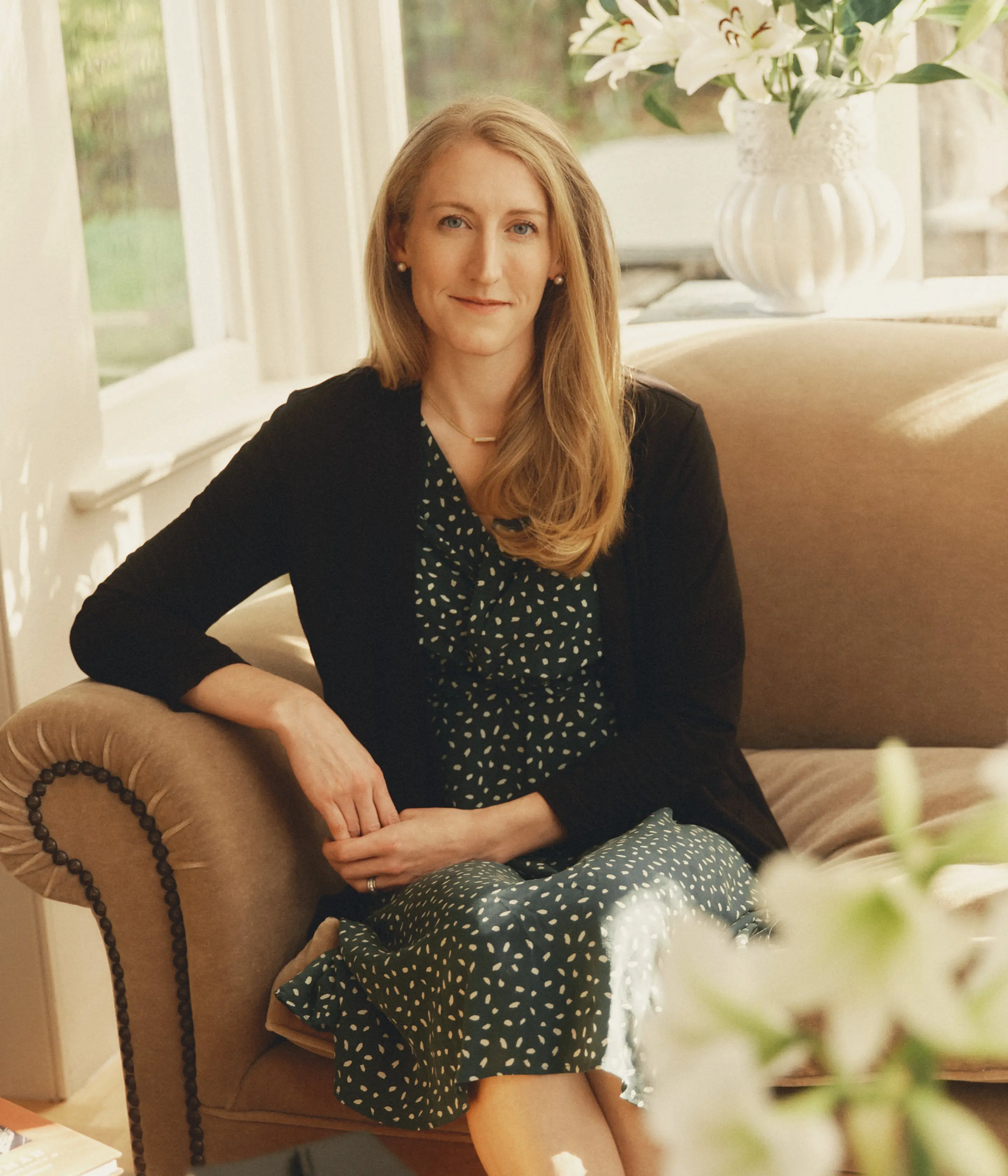

Jessica Zucker
PhD, MPHLavela Psychological Advisor
Psychologist, Award Winning Author
I'm Dr. Jessica Zucker, a clinical psychologist specializing in reproductive and maternal mental health with a background in public health. I've specialized in this area for nearly two decades. Then, after my own second trimester miscarriage, I became intimately acquainted with the resounding cultural silence, stigma, and shame so many of my patients had talked about in the aftermath of pregnancy loss.
Healing doesn't necessarily emerge from statistics or platitudes. Instead, navigating grief comes through sinking into the sheer vulnerability—when we speak the truth about our poignant experiences and commune with others who get it. That's why I launched the #IHadAMiscarriage campaign, wrote countless articles for various outlets, and ultimately penned two books on the topic, Normalize It: Upending the Silence, Stigma, and Shame That Shape Women's Lives, and I Had a Miscarriage: A Memoir, a Movement. I continue to devote my practice to honoring these pain points. I believe in the power of storytelling, as a crucial companion to psychotherapy, because sharing our stories reshapes culture, validates our lived experiences, and builds community.
I earned advanced degrees from New York University and Harvard University. My writing has appeared in The New York Times, The Washington Post, New York Magazine, Vogue, and Harvard Business Review, among others. I've been featured on NPR, CNN, The Today Show, and Good Morning America. I am an advisor at Empathy and sit on the Community Advisory Board at Stanford University School of Medicine.
As a psychologist specializing in reproductive loss and maternal mental health, I have had the profound privilege of sitting with women and families as they navigate the emotional aftermath of pregnancy loss. These experiences are often marked not only by grief, but by self-blame, isolation, and a deep sense of disorientation—feelings that can linger long after the medical aspects of care have ended.
Despite how common reproductive loss is, our culture remains deeply uncomfortable talking about grief—particularly when that grief is tied to fertility, pregnancy, or motherhood. Too often, women are met with silence, minimization, or well-intentioned but harmful platitudes at the very moment they need informed, compassionate support the most.
We are ready for a cultural shift—one that recognizes pregnancy loss as a meaningful psychological event and treats emotional care as essential, not optional. That is why I am deeply honored to partner with Lavela. Lavela is building something both rare and necessary: a thoughtful, evidence-based platform dedicated to supporting women through one of the most tender periods of their lives. Their work fills a critical gap in the pregnancy loss landscape by offering psychotherapy that is accessible, specialized, and rooted in true understanding. I joined Lavela because no one should have to navigate this experience alone, and because healing is possible when people are met with the right kind of support, at the right time.